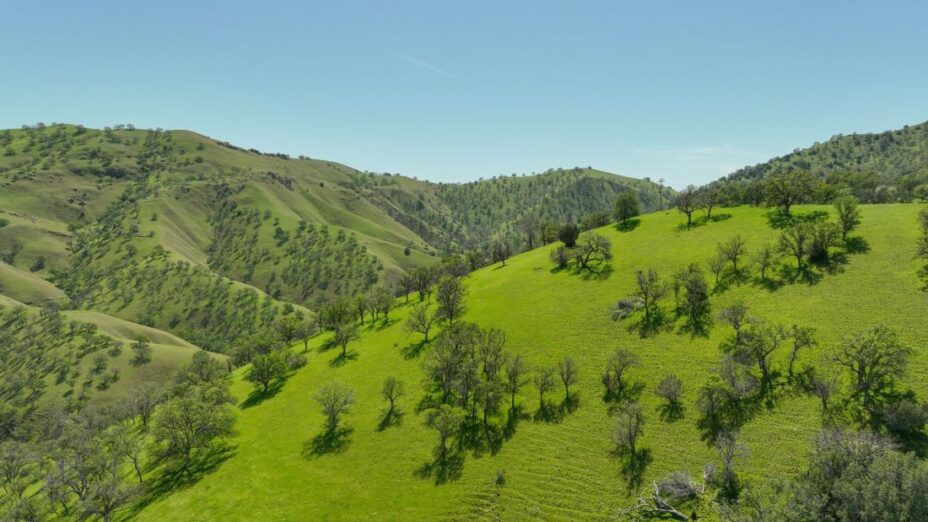
Save Del Puerto Canyon!
Del Puerto Canyon is at risk of being destroyed by the Del Puerto Water District’s proposed dam project. Please take action and send an email opposing the project here (en español aquí).
Earlier this year, the approval of a new route for the proposed relocation of Del Puerto Canyon Road renewed concerns about the Del Puerto Canyon Reservoir project moving forward.
The controversial reservoir would be used to irrigate crops within the arid western side of the San Joaquin Valley and is so large that it could submerge 82,000 acres—almost three times the size of the city of San Francisco, or 25 times the size of nearby Patterson—under a foot of water.
Three years ago, the approval of this disputed project by Del Puerto Water District had been reversed by a court order because of inadequate environmental review. However, in February of this year, the project took a step forward, putting Del Puerto Canyon at risk.
Home to rare wildlife, beautiful scenery, and Native American cultural sites, Del Puerto Canyon must be protected for generations to come.

Del Puerto Creek in the canyon, site of the proposed Del Puerto Canyon Reservoir. Photo: Scott Hein
Background
Del Puerto acts as a gateway to the Diablo Range. It’s a beautiful landscape that is home to many rare species of wildlife and plants like American badger, California red-legged frog, mountain lions, and tule elk.
The world’s largest population of nesting golden eagles forages in the grassland and woodland here. There are historic records of the endangered San Joaquin kit fox.

American badger in the Diablo Range. This animal burrows in Del Puerto Canyon. Photo: Juan Pablo Galván Martínez
The canyon has major historical significance. It was used by Native American and Mexican travelers to navigate through the Diablo Range.
It was also home to Hoyumne and Miumne Yokuts Indians, whose presence in the canyon can be seen in grinding rocks, burial grounds, and historical pathways carved into the Gateway Rocks of the canyon.
Some of the first dinosaur bones discovered in California were in the canyon as well, highlighting its historical and paleontological significance. The reservoir project threatens all of this.
Though the project stalled because the Del Puerto Water District did not address the relocation of Del Puerto Canyon Road, eventually leading to a lawsuit, that does not mean the reservoir proposal has gone away.
The Stanislaus County Board of Supervisors approved a new alignment for the proposed relocation of the road on February 4, 2025, raising concerns about the project moving forward.
With construction proposed to begin by 2026 or 2027, now is a critical time to oppose the road relocation and the reservoir project.
Alternatives
Water storage alternatives are already underway near Stanislaus County that reduce the need for a new reservoir in Del Puerto Canyon.
The recently approved San Luis Reservoir expansion in Merced County will add 130,000 acre-feet of storage capacity—bringing the total to over 500,000 acre-feet—and costs $200 million less than the proposed Del Puerto project.
Water is a big issue in California, and project proponents often purposely mislead the public about projects that are for drinking water, and ones that are for agriculture.
Then they further confuse the issues of “food” with what is often export agriculture—for example, exporting nut crops like almonds and pistachios overseas. Nothing about this project relates to drinking water. No one is going to go hungry if it’s not built.
What’s also true is that surface water supplies are oversubscribed, and groundwater is over drafted.
Drowning a spectacular canyon filled with incredible wildlife and significant cultural sites is not a solution to water problems. The real answer is more groundwater recharge on the flat San Joaquin Valley floor or on fallow farm fields.
According to the California Department of Water Resources, “California’s groundwater basins can hold a massive amount of water—at least 850 million acre-feet, compared to the 50 million acre-feet that all the major above-ground reservoirs can hold combined.”
The best answers are literally beneath our feet.
Risks
There are many risks associated with the development of the Del Puerto project. The City of Patterson already has plans to grow and build infrastructure, but this growth is within the dam’s inundation zone, putting 55,000 people at risk of flooding.
The dam would be built near multiple fault lines, making earthquakes, dam failure, and flooding a real risk.
Furthermore, the city has laid out plans for a new nature park at the Gateway with support from past city leadership and Patterson’s Parks and Recreation Department.
This park would be impossible to create if the dam and reservoir are constructed. Central Valley residents, already with few open space access points, will lose out on another natural area for recreation.

Site of the proposed reservoir and visualization of Alternative Route 9, the proposed route approved by Stanislaus County supervisors.
What Save Mount Diablo Is Doing
Save Mount Diablo is fighting to protect Del Puerto Canyon. During the Del Puerto Water District lawsuit, Save Mount Diablo provided funds to the Save Del Puerto Canyon coalition to aid in their legal efforts.
During that period, we also wrote comments critical of the flawed environmental review of the proposal. Opposition from a variety of stakeholders and legal challenges stalled the project.
Currently, Save Mount Diablo has offered a $5,000 matching challenge donation to Save Del Puerto Canyon to contribute to the fight against the project.
Del Puerto Canyon is a critical piece of the Diablo Range. Saving it will save habitat for rare species, preserve open space connectivity, and provide countless opportunities for recreation and connection to nature.
If the canyon is flooded, we will permanently lose what makes this land so special.

Canyon walls within Del Puerto. Photo: Scott Hein
Del Puerto Canyon Should Be a Park
The bottom line: Del Puerto Canyon needs to be protected.
Some steps people can take to help Save Del Puerto Canyon’s advocacy efforts include speaking out and writing to elected officials about why the canyon is important and asking them to respect the pre-existing plans for the public park within the Gateway Rocks.
Patterson City Council meetings and Stanislaus County Board of Supervisors meetings are open to public comments from people from both within and outside of the city and county.
Also, subscribe to emails on Save Del Puerto Canyon’s website and follow them on social media for announcements about their monthly canyon community cleanups.
And consider making a tax-deductible donation to Save Del Puerto Canyon’s GoFundMe managed by the Green Incubator.

